7 Types of Digital Marketing Explained | A Complete Guide for Businesses
Learn the 7 types of digital marketing, including SEO, PPC, social media, content, email marketing, and discover which strategies work best for your business.

Understanding how each digital marketing channel fits into your funnel is key to maximum ROI.
Digital marketing covers far more than posting on Instagram or running Google Ads.
Businesses today can reach potential customers through search engines, paid advertising, social media, websites, email and many other digital channels. Each channel serves a different purpose, and the right combination depends on what a business wants to achieve.
So, what are the 7 types of digital marketing?
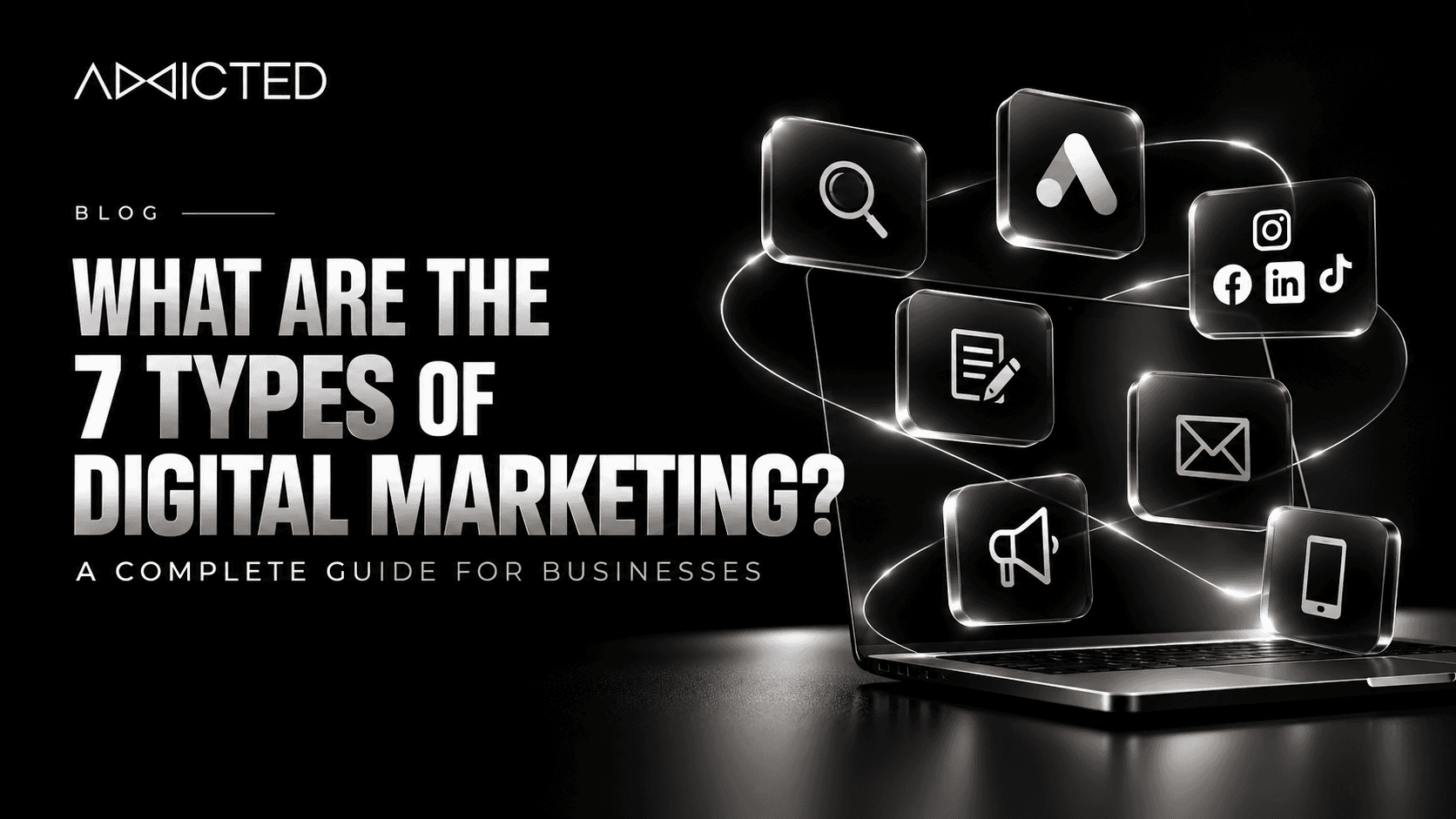
The seven commonly used types are Search Engine Optimization (SEO), Search Engine Marketing and Pay-Per-Click Advertising (SEM/PPC), Social Media Marketing, Content Marketing, Email Marketing, Affiliate and Influencer Marketing, and Mobile Marketing.
They are not seven completely separate activities. In a strong digital marketing strategy, they often work together to move someone from discovering a business to becoming a customer.
1. SEARCH ENGINE OPTIMIZATION (SEO)
Search Engine Optimization, or SEO, is the process of improving a website's visibility in organic search results.
When someone searches Google for a product, service or answer, businesses want their website to appear when that search is relevant to what they offer. SEO helps improve that visibility through areas such as technical optimisation, on-page content, keywords, internal linking, website performance, local SEO and authority building.
For example, a Chennai business offering property management services may want to appear when potential customers search for terms such as “property management Chennai” or related questions.
SEO is particularly valuable for businesses looking to build long-term organic visibility rather than relying entirely on paid advertising.
It can take time to build results, especially in competitive industries, but a strong SEO strategy can continue attracting relevant visitors after the initial optimisation and content work has been completed.
2. SEARCH ENGINE MARKETING AND PPC ADVERTISING
While SEO focuses primarily on organic visibility, Search Engine Marketing (SEM) often refers to paid search advertising, particularly Pay-Per-Click (PPC) campaigns such as Google Ads.
Paid search allows businesses to appear when potential customers are actively searching for relevant products or services.
For example, someone searching for “digital marketing agency in Chennai” may see paid advertisements from agencies targeting that keyword.
Google Ads can be useful when a business wants to capture existing search demand and generate traffic, leads, enquiries or sales without waiting for organic rankings to develop.
The important part is not simply getting clicks. Effective PPC advertising requires relevant keyword targeting, compelling ads, appropriate landing pages, conversion tracking and continuous campaign optimisation.
3. SOCIAL MEDIA MARKETING
Social media marketing involves using platforms such as Instagram, Facebook, LinkedIn and other social networks to build awareness, engage audiences and support business growth.
Unlike search marketing, where someone may already be looking for a particular product or service, social media can introduce a business to people before they have actively decided to buy.
A fashion brand might use Instagram to showcase products and build a visual identity. A B2B software company might use LinkedIn to share expertise and reach decision-makers. A local restaurant might use social content to stay visible to people in its area.
Social media marketing can include content strategy, social media management, profile optimisation, community engagement and paid social advertising.
“The objective should not simply be to gain followers. The stronger question is: what should your social media presence make people think, feel or do?”
4. CONTENT MARKETING
Content marketing involves creating and distributing useful information to attract, educate and engage a relevant audience.
Blog articles are one of the most familiar forms of content marketing, but content can also include videos, guides, case studies, newsletters, infographics, ebooks and other useful resources.
Content marketing and SEO often work closely together. A business can create content around questions its customers are searching for, helping build organic visibility while demonstrating expertise.
For example, a real estate company could publish guides about buying property, location comparisons and investment considerations. A healthcare business could create educational content around its services and common patient questions, while staying within appropriate professional and regulatory boundaries.
Good content should have a purpose. Publishing more content does not automatically mean better marketing. The content needs to be useful, relevant and connected to what the audience actually wants to know.
5. EMAIL MARKETING
Email marketing allows businesses to communicate directly with people who have already shown an interest in the brand.
This can include newsletters, promotional emails, product updates, abandoned-cart messages, lead nurturing and automated customer journeys.
Email is particularly useful because businesses are not entirely dependent on an algorithm deciding who sees their message.
For an ecommerce business, email could encourage a previous customer to return. For a B2B company, a series of useful emails could help nurture a potential customer who is not ready to make a decision immediately.
The effectiveness of email marketing depends heavily on relevance. Sending the same message to everyone is rarely as effective as segmenting audiences and sending information based on their interests, behaviour and stage in the customer journey.
6. AFFILIATE AND INFLUENCER MARKETING
Affiliate marketing involves working with partners who promote a product or service and receive a commission or other agreed compensation for resulting sales or actions.
Influencer marketing is related but works differently. Brands collaborate with creators who already have an audience and influence within a particular niche.
A beauty brand might work with a creator whose audience is interested in skincare. A fitness company might partner with a relevant fitness creator. A software company might collaborate with an industry expert who has credibility among its target customers.
The key is relevance. A large audience does not automatically make an influencer a good marketing partner. Engagement, audience quality, credibility and alignment with the brand can matter much more than follower count alone.
7. MOBILE MARKETING
Mobile marketing focuses on reaching customers through mobile devices such as smartphones and tablets.
This can include SMS marketing, mobile apps, push notifications, mobile advertising and location-based marketing.
Mobile is also important beyond dedicated mobile campaigns.
A large proportion of online activity happens on smartphones, which means a business website, landing page, advertisement and social media experience should work well on smaller screens.
For many businesses, mobile optimisation is therefore part of almost every other area of digital marketing rather than something that exists completely on its own. A slow or difficult-to-use mobile website can undermine an otherwise strong SEO, advertising or social media campaign.
WHICH TYPE OF DIGITAL MARKETING IS BEST FOR A BUSINESS?
There is no single best type of digital marketing for every business.
The right digital marketing channels depend on your customers, industry, goals, competition, budget and buying journey.
A local business may benefit heavily from SEO, Google Ads, local SEO and social media marketing. An ecommerce brand may combine SEO, paid advertising, social media, influencer marketing and email. A B2B software company may place greater emphasis on SEO, content marketing, LinkedIn and lead nurturing.
The important thing is not to use every digital marketing channel simply because it exists.
The strategy should start with the customer: Where do they discover businesses like yours? What influences their decision? What information do they need before buying?
HOW THE 7 TYPES OF DIGITAL MARKETING WORK TOGETHER
The strongest digital marketing strategies rarely depend on a single channel.
Someone might first discover a business through Google, visit its website, see the brand again on Instagram, read a blog article and eventually become a customer after receiving an email.
Each interaction can contribute to the same customer journey. That is why businesses should think about digital marketing as a connected system rather than seven separate services.
SEO can bring organic traffic. Google Ads can capture immediate search demand. Social media can build awareness. Content can answer questions and establish expertise. Email can nurture existing leads and customers. Influencers can introduce the brand to new audiences. Mobile marketing can keep the business connected with customers wherever they are.
The right combination creates a much stronger digital presence than treating every channel independently.
HOW TO CHOOSE THE RIGHT DIGITAL MARKETING STRATEGY
Before investing in digital marketing, define what you actually want the marketing to achieve.
If your priority is organic visibility, SEO may deserve more attention. If you need immediate traffic for high-intent searches, Google Ads could be more appropriate. If you need to build awareness around a consumer brand, social media and content may play a larger role.
Budget matters too. A small business does not necessarily need to be active on every platform. Starting with the channels most closely connected to your customers and business objectives can be more effective than spreading a limited budget across everything.
The best digital marketing strategy is therefore not the one with the most channels. It is the one where every channel has a reason to be there.
DIGITAL MARKETING SERVICES FOR BUSINESSES
At Addicted, we build digital marketing strategies around the opportunities that matter to each business.
Our services include SEO, Google Ads, Meta Ads, social media marketing, website development, Google Business Profile optimisation, and branding and logo design.
As a Chennai-based digital marketing agency, we work with businesses across industries and help them choose the digital channels that make sense for their goals, customers and market.
Whether you need digital marketing services in Chennai, SEO, Google Ads, social media marketing or a broader strategy, the starting point should always be understanding what your business needs to achieve.
Want to build a digital marketing strategy that actually fits your business? Contact Addicted at +91 6369344474 or visit addicted.com.
Frequently Asked Questions
Direct answers to common queries regarding this topic.

Addicted Media Team
Omnichannel Strategy & Media